Delivery Zone Management
As the Senior Product Designer with over 7 years of experience, I undertook the challenge of enhancing the delivery zone management system for SnappFood, a leading food delivery platform in Iran, serving over 500,000 orders daily. The platform connects users with restaurants (Vendors), enabling them to order food and have it delivered to their doorstep. To ensure efficient delivery and customer satisfaction, SnappFood implemented a delivery zone management system, allowing vendors to manage their delivery zones, edit delivery costs, and activate or deactivate specific zones based on their preferences.

SnappFood, Vendor Backoffice
2006
Food Delivery
$12 Million (2023)
1,000+
Challenge
SnappFood's vendors faced a time-consuming process when managing their delivery zones. With an average of 60 delivery zones per vendor, the need for individual editing and activation/deactivation resulted in a significant time investment. The lack of bulk editing capabilities meant that vendors had to manually update each zone, leading to operational inefficiencies.
Results
The implementation of the enhanced delivery zone management system yielded substantial benefits, including a remarkable 30-minute time savings per session for vendors, equivalent to 120 hours annually for those managing 60 zones.
The streamlined multi-select and bulk editing features led to a 70% reduction in the time it takes to manage delivery zones, significantly improving overall efficiency. Vendor satisfaction soared, with 95% expressing contentment in a post-implementation survey, citing the system's user-friendly nature and time-saving advantages.
Furthermore, the optimized process resulted in a noteworthy $100,000 annual reduction in operational costs. Notably, improved delivery times contributed to a 5% increase in customer satisfaction scores within the first three months of system implementation.
70%
Time Reduction managing delivery zones
5%
Increase in customer satisfaction
$100,000
Annual reduction in operational costs
Problem statement
SnappFood's vendors faced a time-consuming process when managing their delivery zones. With an average of 60 delivery zones per vendor, the need for individual editing and activation/deactivation resulted in a significant time investment. The lack of bulk editing capabilities meant that vendors had to manually update each zone, leading to operational inefficiencies.
Research and Discovery
User interviews
In-depth conversations with vendors unearthed a consistent pain point: the need for a more efficient way to manage multiple delivery zones simultaneously. Vendors expressed frustration not only with the time-consuming nature of the process but also with the challenge of deciphering the map and the lackluster interface.
Cometitive analysis
Studying competitor platforms revealed a stark contrast in user experience. The industry standard included efficient delivery zone management with clear, user-friendly interfaces. SnappFood's outdated colors and interface design became a critical differentiator that demanded immediate attention.
Old Design
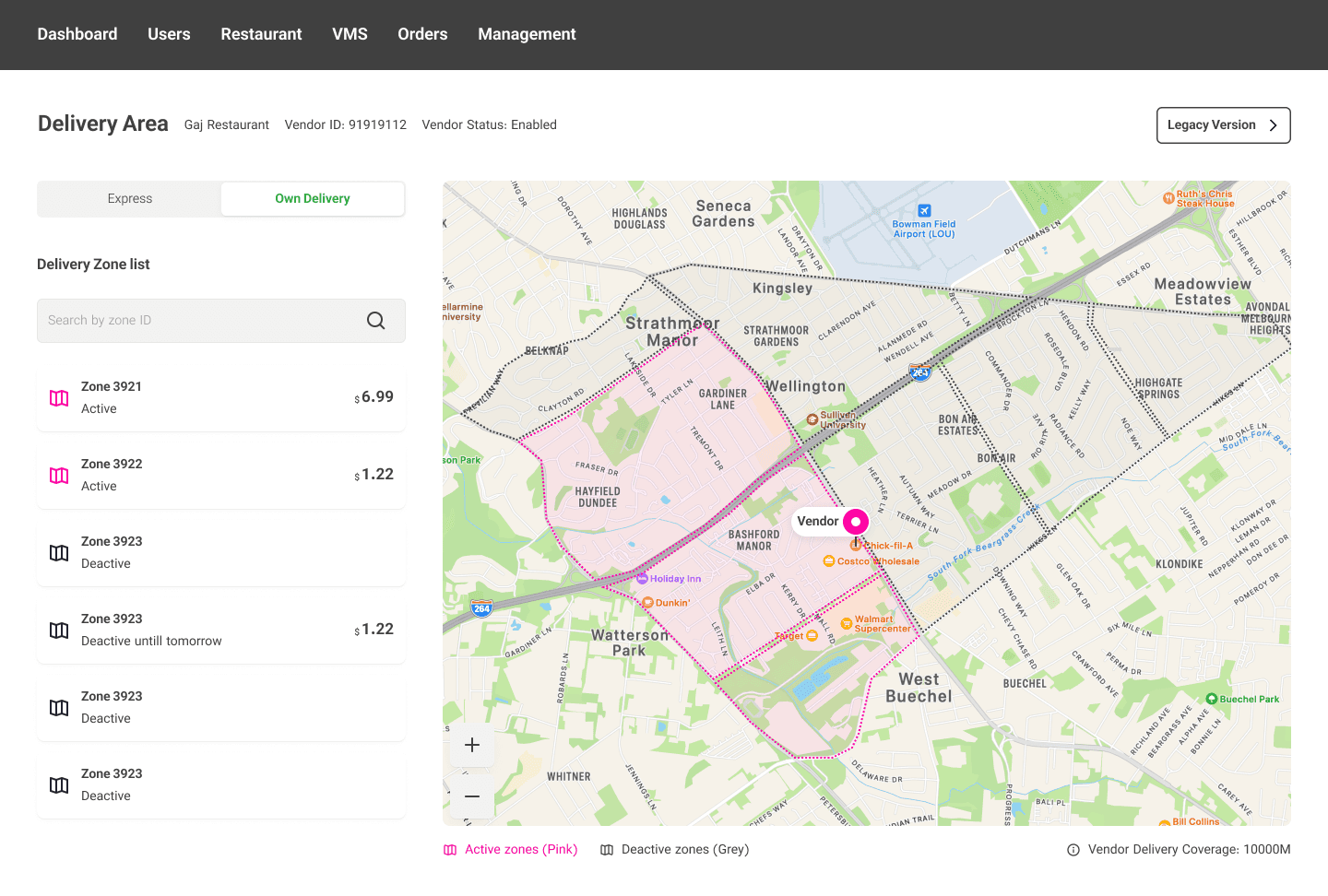
Delivery area page: In this page users can view a list of available delivery zones and select each one of them from map or listing for edit the availability of delivery and the delivery cost of each delivery zones.
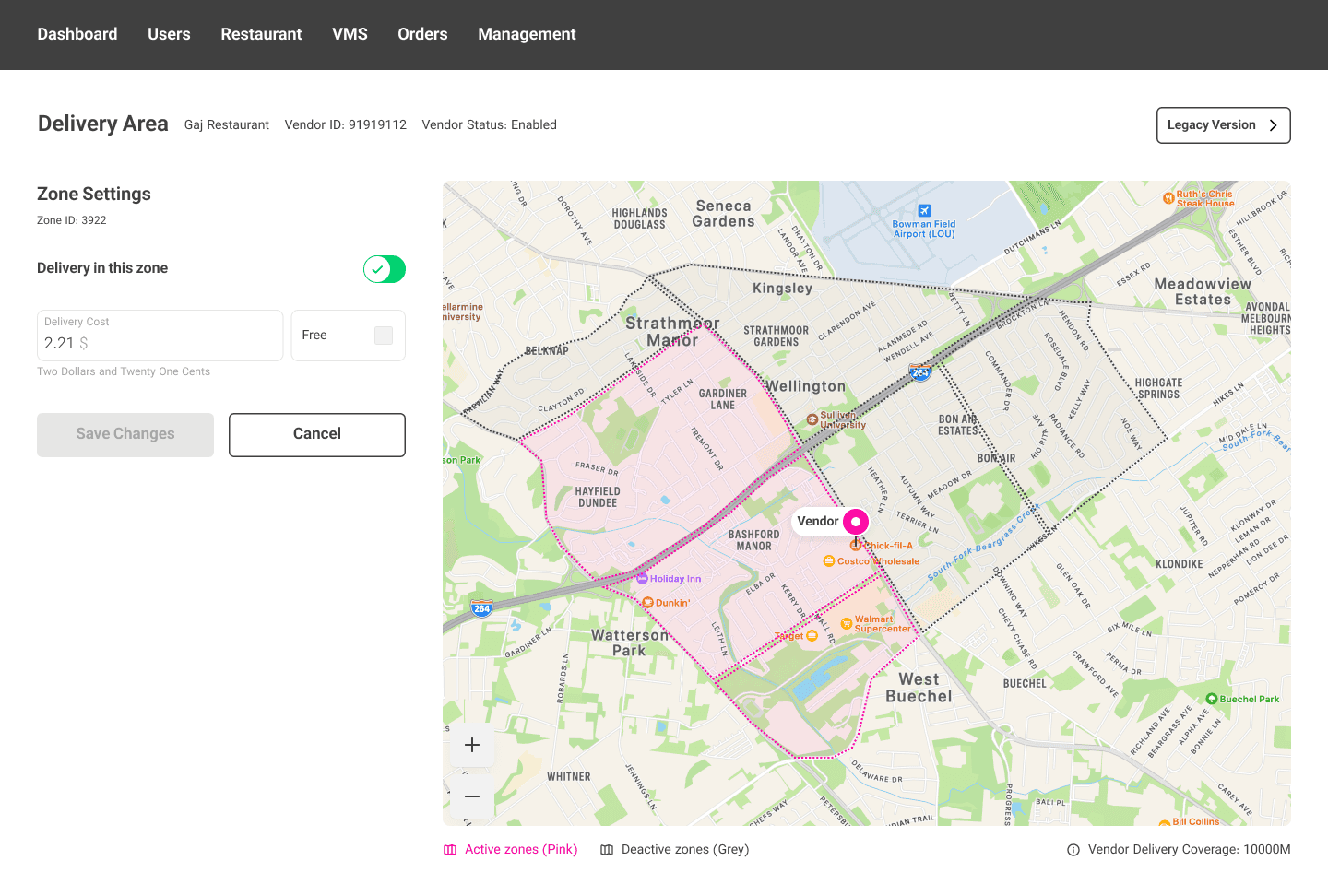
Zone settings page: On this page, users can view and edit the properties of each zone, containing delivery availability and delivery cost. One of the reported problems with this page is that the users can't see which polygon is selected and system visibility and status are bad.
Design Goals
Time Reduction managing delivery zones
Increase in customer satisfaction
Annual reduction in operational costs
Annual reduction in operational costs
Design Proccess
Ideation: Collaborating with cross-functional teams, we brainstormed solutions that would address the pain points identified during the research phase. The concept of introducing a bulk editing feature emerged as a clear solution to streamline the delivery zone management process.
Wireframing and Prototyping: I developed wireframes and prototypes to visualize the user flow and interactions within the enhanced delivery zone management system. The design focused on a clean and intuitive interface that allowed vendors to select multiple zones and make edits in a single action.
User Testing: Iterative testing with actual vendors was crucial in refining the design. Feedback was collected to ensure the bulk editing feature was not only functional but also user-friendly. Adjustments were made to improve the clarity of the interface and enhance the overall user experience.
Solutions and Design Decisions
1. Multi Selection
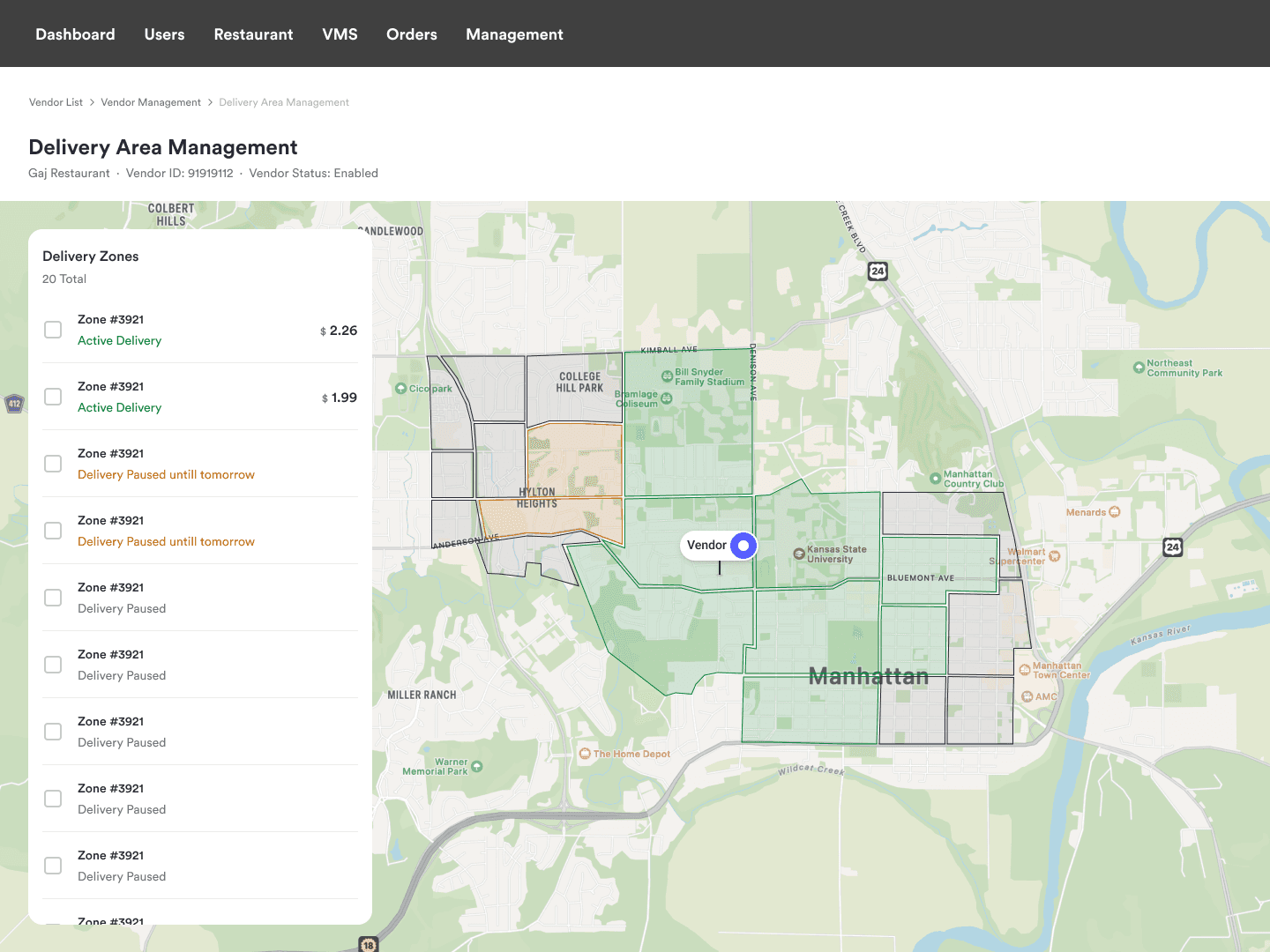
The centerpiece of the enhancement was the introduction of a robust bulk editing feature. Vendors can now select multiple delivery zones at once, enabling them to update delivery costs, activate/deactivate zones, or make other changes in a single action. This feature significantly reduces the time vendors spend on managing their delivery zones.
2. Bulk Editing
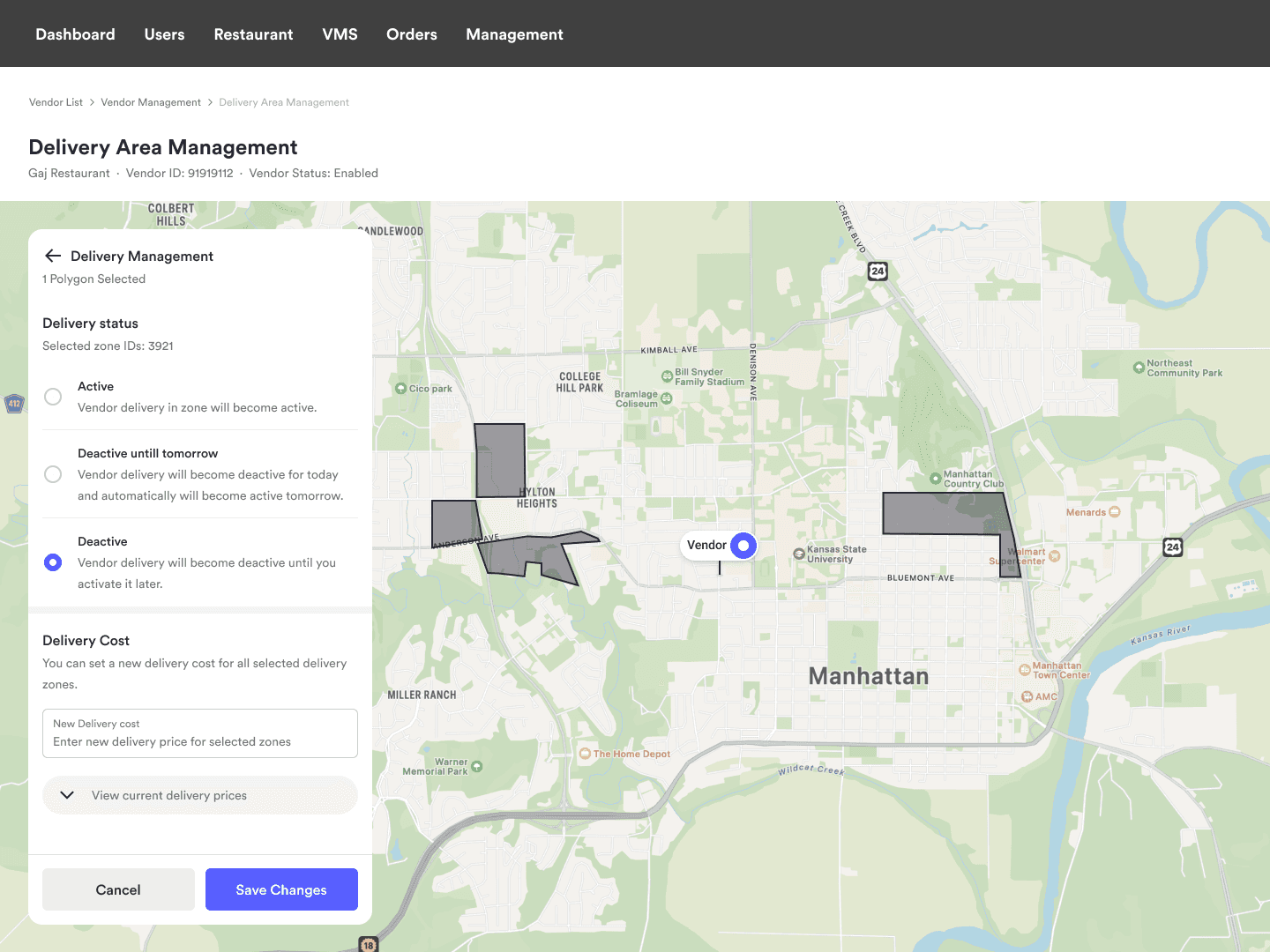
Enabling vendors to modify prices or availability for selected zones in bulk, saving time and effort.
3. Visual Representation

Utilizing clear visual representations of delivery zones, making it easy for vendors to identify and manage specific zones.
4. Intuitive Interface
Designing an intuitive interface that minimizes the steps required to manage delivery zones, reducing cognitive load and improving efficiency.
New and Updated Design

Zone Management Page
In the zone management page, the User can view all available delivery zones on the map and the listing on the left side of the page. We tried to differentiate zones with different delivery statuses with the new colour system. Active delivery zones will show green, temporary deactivated zones will show light brown, and deactivated delivery zones will appear grey on the map and in listing rows.
Zone Selection
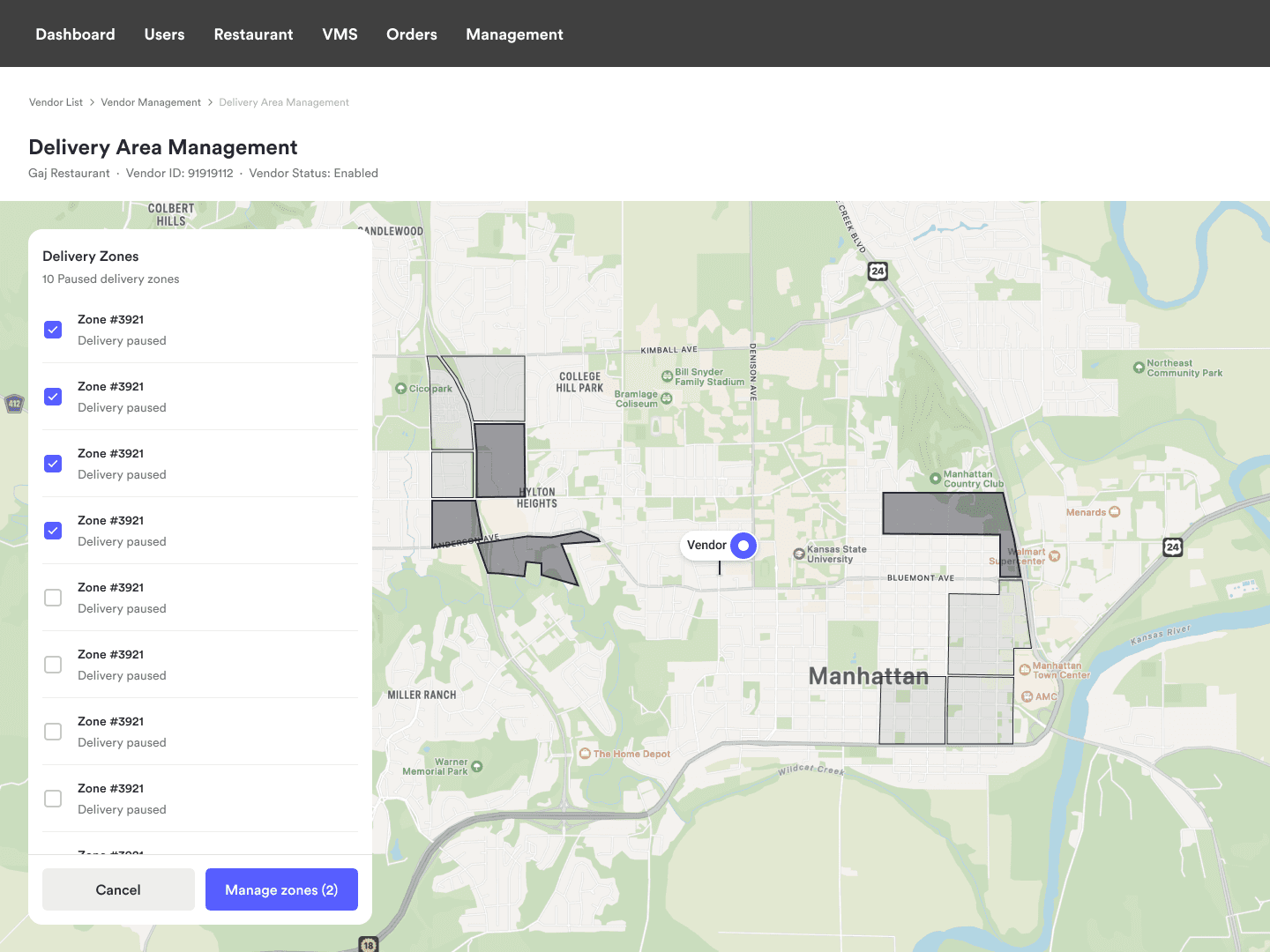
By tapping each delivery zone on the map or selecting the checkbox for zone from zone listings, the User can select and edit zones afterwards. Selecting the first delivery zone will hide all other zones with different delivery statuses to prevent user error. For example, In the above screenshot, the User has selected a delivery zone with the "Delivery Paused" status, and all of the other polygons with the "Active" status and "Deactive until tomorrow" status will hide.
Zone Management
Once the user enters the delivery management page, they will be able to see the current status of delivery zones. Moreover, they can also modify the status of these zones. Additionally, there is a text input box that allows the user to define a new delivery cost that applies to all selected delivery zones. If the user enters a new delivery cost, it will override the previously set amount of delivery cost for all of the selected delivery zones.
Change Confirmation
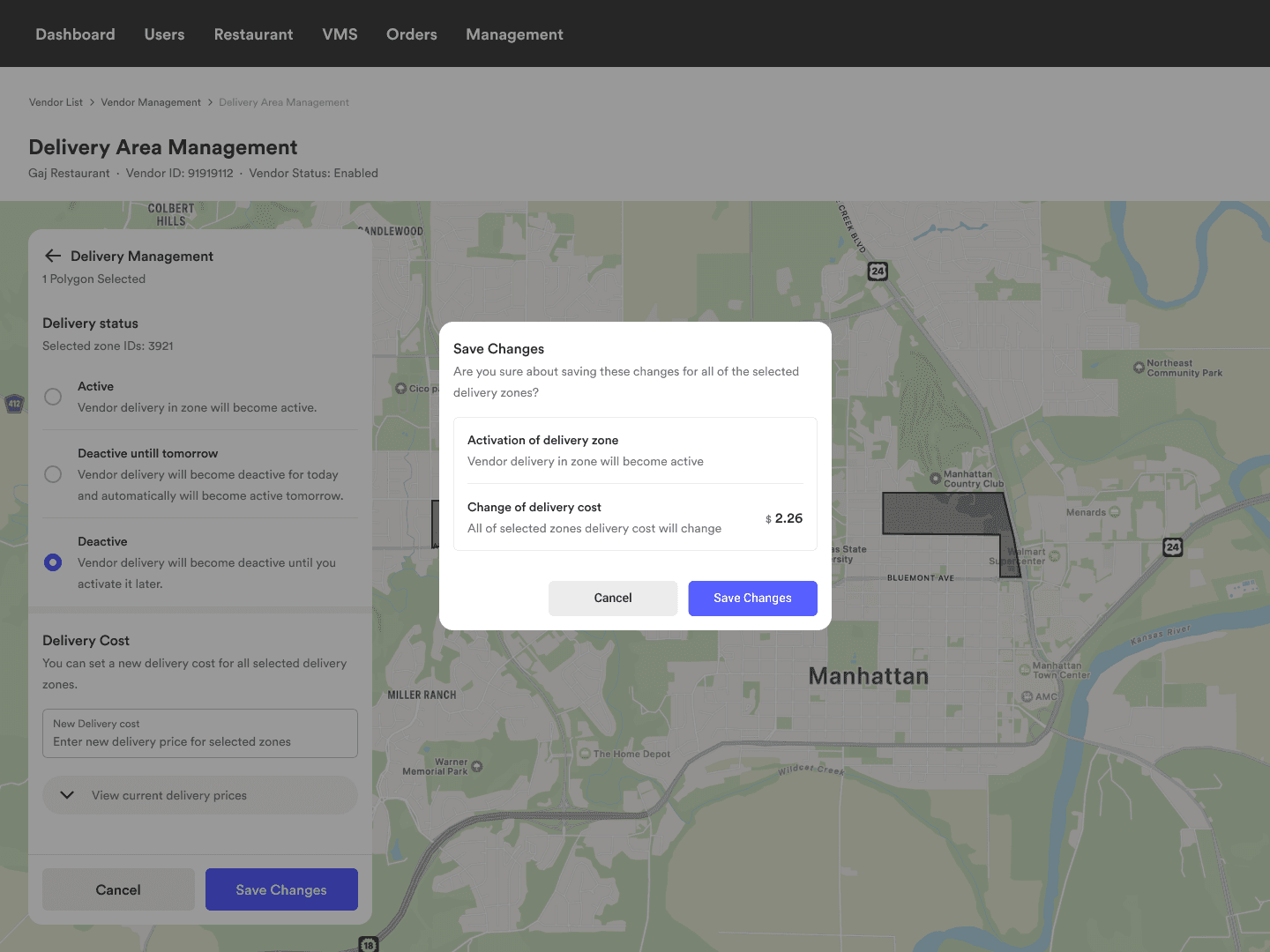
When users select "Save Changes", We decided to show a modal that indicates all of the changes that the user made, containing changes to the delivery status and the price change. " we
Results
The implementation of the delivery zone management system resulted in significant improvements, including:
1
Reduced Time Consumption
Vendors were able to manage their delivery zones in a fraction of the time previously required. On average, vendors on average saved approximately 30 minutes per session managing delivery zones, translating to a time savings of 120 hours per year for a vendor with 60 zones.
2
Improved Efficiency
The ability to multi-select and bulk edit zones streamlined the process, enhancing overall efficiency. Vendors were able to manage delivery zones 70% faster compared to the previous method.
3
Increased Vendor Satisfaction
Vendors expressed satisfaction with the new system, appreciating its ease of use and time-saving benefits. A survey conducted after the implementation of the new system revealed that 95% of vendors were satisfied with the delivery zone management system.
4
Reduced Operational Costs
By streamlining the delivery zone management process, SnappFood reduced the administrative costs associated with managing vendor delivery zones. This led to an estimated annual cost savings of $100,000.
5
Enhanced Customer Satisfaction
By enabling vendors to manage their delivery zones more efficiently, the new system contributed to improved delivery times and customer satisfaction. Customer satisfaction scores related to delivery times increased by 5% within the first three months of implementing the new system.
User Feedback
Post-implementation feedback was overwhelmingly positive. Vendors appreciated the efficiency gained through bulk editing and noted the intuitive design of the new interface. The feature became a key differentiator for SnappFood in the competitive market.
Conclusion
The delivery zone management project exemplifies the power of user-centered design in addressing user needs and enhancing product usability. By understanding vendor pain points and implementing effective design solutions, we were able to significantly improve their experience and streamline their workflow. The success of this project underscores the importance of empathy, collaboration, and iteration in creating user-centric products.
This project for SnappFood demonstrates my commitment to addressing user needs and enhancing product functionality. By leveraging my design expertise, I successfully improved the efficiency of a critical aspect of the platform, contributing to SnappFood's continued success as a market leader in the food delivery industry.